Appearance
Solar Module
Module Overview
The Solar module in Encast provides comprehensive modelling capabilities for photovoltaic solar energy systems across diverse applications from residential rooftop installations to utility-scale solar farms. This module utilises sophisticated weather modelling and photovoltaic performance algorithms to accurately predict electricity generation based on local irradiance conditions, panel specifications, and system configuration parameters.
Solar photovoltaic systems convert sunlight into electricity through the photoelectric effect, representing one of the most widely deployed renewable energy technologies globally. The module accounts for various panel technologies, mounting configurations, tracking systems, and environmental factors to provide accurate performance predictions and energy yield analysis throughout the system's operational life.
Unlike conventional generation technologies, solar systems exhibit significant variability based on weather conditions, seasonal patterns, and geographic location. The technology's continued cost reductions, improving efficiency characteristics, and environmental benefits make solar installations essential components in renewable energy systems from distributed residential applications to large-scale utility developments.
Data Entry
Installation
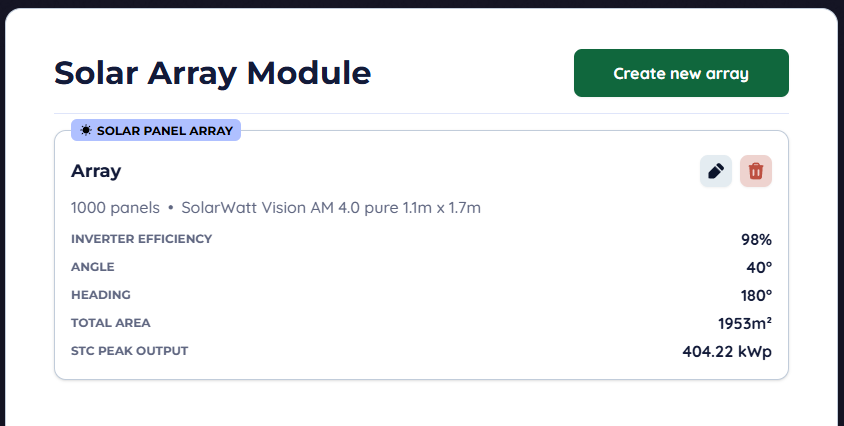
Solar arrays are added by selecting "Create new installation".
Installation Details

Name: Identifier for the installation. Inverter Efficiency: The round-trip efficiency of the inverter (typically around 90%).
Installation Design Life
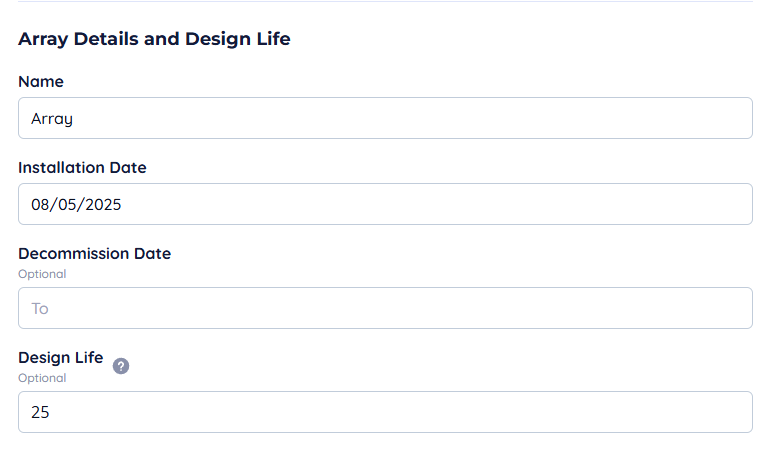
Defines the operational period of the solar array.
- Installation Date: Date installation is complete.
- Decommission date (Optional): Date after which the installation is unavailable.
- Design Life (Optional): Number of years from installation date the installation will be available.
An installation date is required. If neither decommission date nor design life are present, the array is considered installed until the end of the simulation.
Solar Panel Model
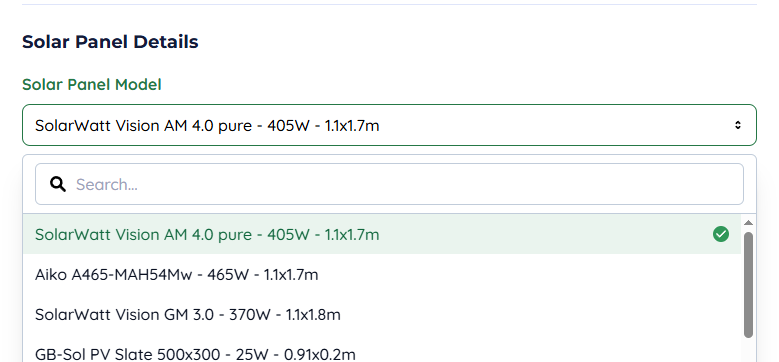
Select the desired solar panel model from the drop-down menu.
Panel Quantity
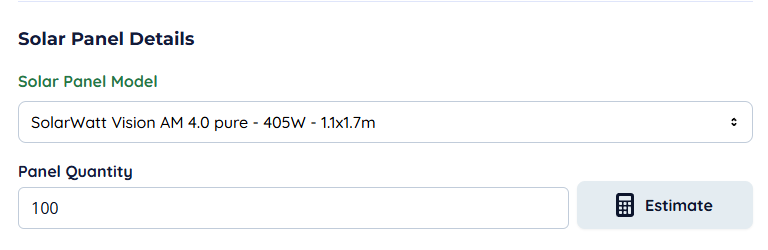
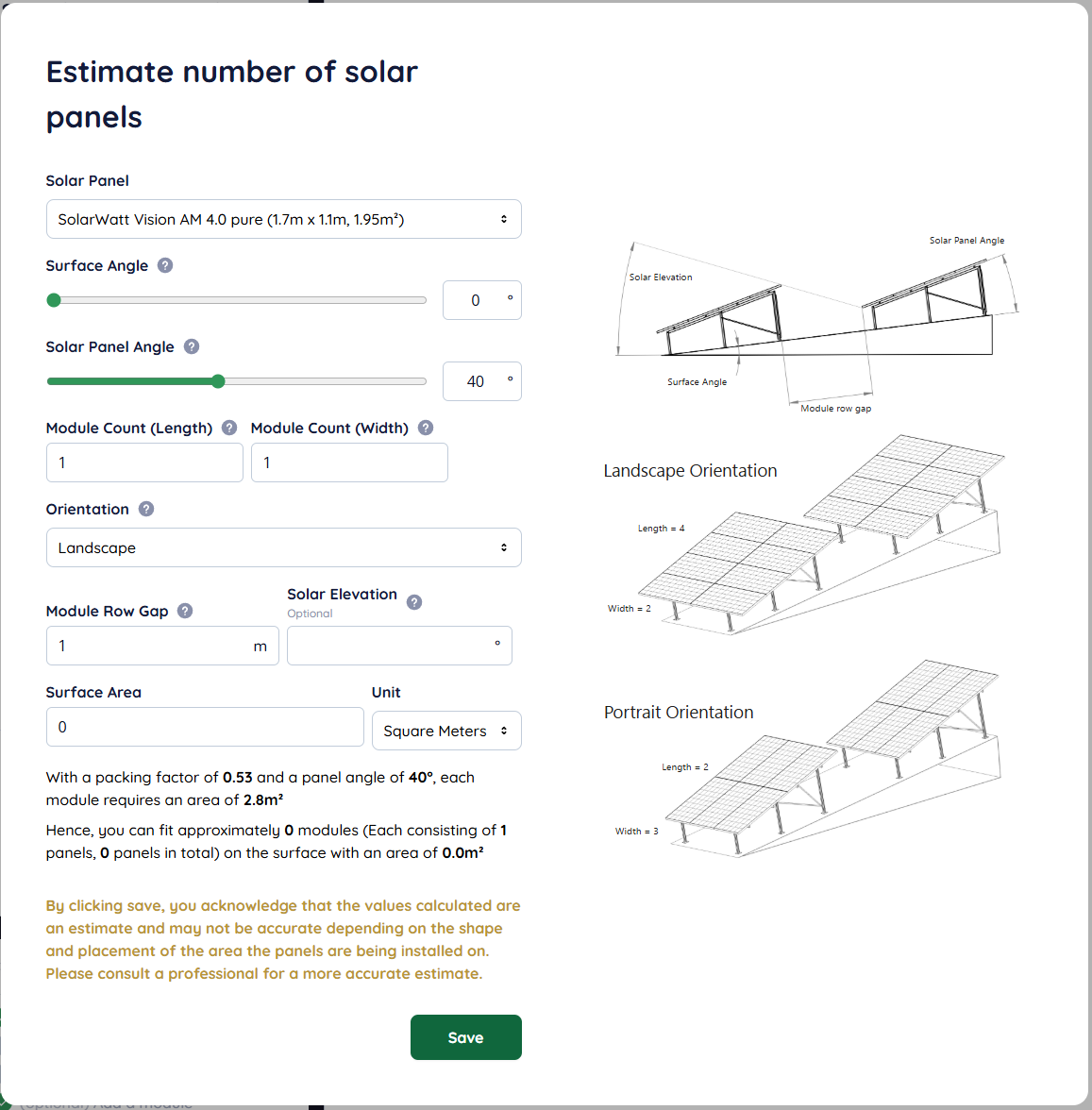
In Solar panel details, select the number of panels in the array. Use the "Estimate" button for a calculator based on the area available.
Location Information
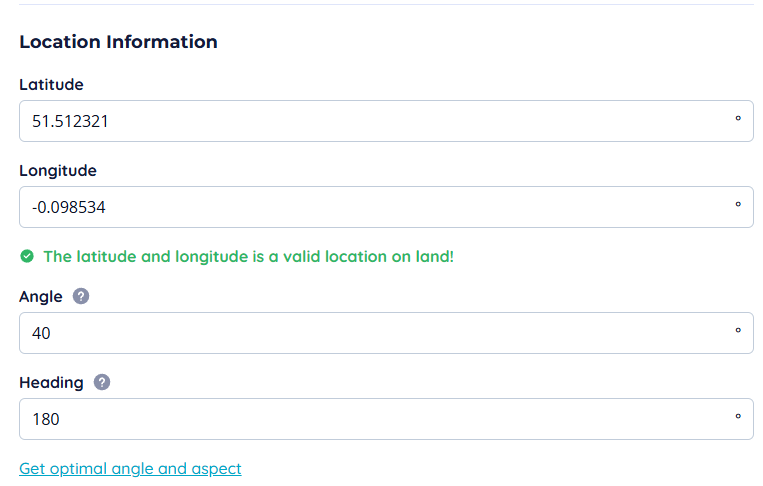
- Latitude/Longitude: Coordinates for the array (accuracy of 90m²).
- Angle: Panel angle from the horizontal plane (0° is flat, 90° is vertical).
- Heading: Degrees from north the panel faces (0° is north, 270° is west). Optimal angle and aspect can be estimated.
Solar Losses
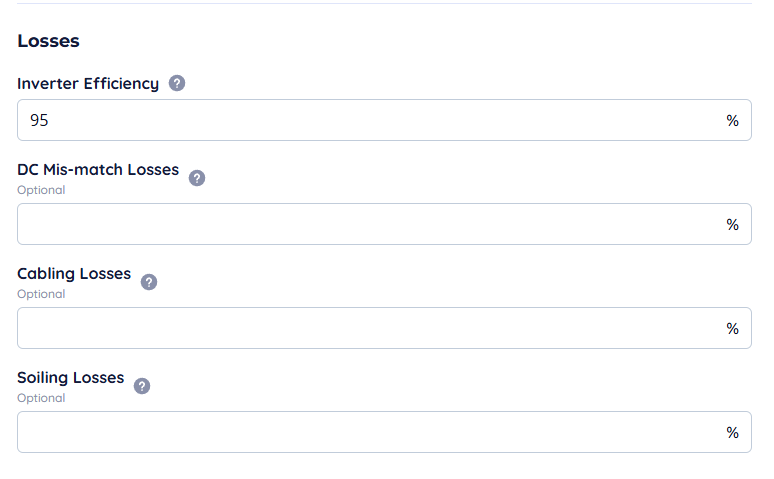
System losses account for the various factors that reduce the theoretical maximum output of the solar array under real-world operating conditions.
Modelling Options
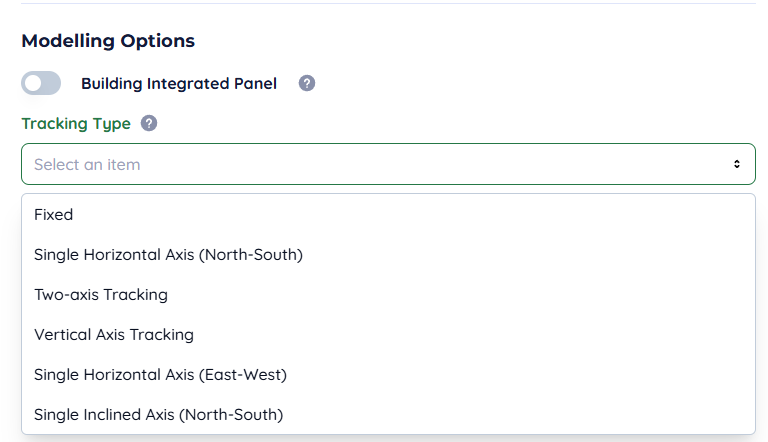
- Building Integrated panels: Is the panel directly integrated into the building?
- Tracking Type: Fixed, Single Horizontal Axis (North-South, East-West), Two-axis Tracking, Vertical Axis Tracking, Single Inclined Axis (North-South).
Operational Times and Maintenance
- Operational Times can be used to define the times when an installation is active.
- Maintenance is used to create shutdown periods to maintain assets or automatic costs based on the number of hours an installation has run.
These are explained in more detail in the Operational Times and Maintenance Section after Modules.
Specialisations and Use Cases
Integration with Other Systems
Solar arrays complement energy systems and support renewable energy strategies by:
- Providing clean electricity generation that reduces reliance on fossil-fuel-based power sources
- Supporting grid stability through distributed generation and reducing transmission losses
- Enabling energy storage integration for managing solar intermittency and providing dispatchable renewable power
- Facilitating electric vehicle charging infrastructure with renewable electricity supply
Residential and Commercial Applications
Solar installations serve critical roles across diverse residential and commercial applications, each requiring specific system sizing and configuration approaches based on electricity consumption patterns, roof characteristics, and grid connection requirements. Residential rooftop installations typically range from 4 to 20 kW capacity, providing partial to complete electricity supply for household consumption while often incorporating net metering arrangements for excess electricity export.
Commercial buildings leverage larger solar installations ranging from 50 to 500 kW to offset significant electricity consumption while reducing operating costs and achieving sustainability targets. Office buildings, retail facilities, and manufacturing operations often incorporate solar canopies over parking areas or large rooftop installations that utilise otherwise unused space. These installations frequently integrate with building management systems to optimise energy consumption patterns and maximise self-consumption of solar electricity.
Educational institutions and government facilities utilise solar installations as both cost-saving measures and educational resources, demonstrating renewable energy technologies while reducing public sector energy costs. These installations often incorporate monitoring systems that provide real-time performance data for educational programs and energy management purposes.
Healthcare facilities and critical infrastructure applications require careful integration of solar systems with backup power requirements, often incorporating battery storage systems to provide emergency power capabilities while maximising renewable electricity utilisation during normal operations.
Utility-Scale and Industrial Applications
Large-scale solar installations ranging from 1 to 100 MW capacity serve utility electricity generation markets, providing significant renewable electricity capacity for wholesale electricity markets. These installations often incorporate sophisticated tracking systems that increase annual energy yield by 15–25% compared to fixed installations while requiring more complex operation and maintenance procedures.
Industrial facilities leverage solar installations for process electricity supply, particularly in manufacturing operations with high daytime electricity consumption that aligns well with solar generation patterns. Food processing, automotive manufacturing, and electronics production facilities often incorporate large rooftop or ground-mounted installations that provide significant portions of their electricity requirements.
Agricultural applications include agrivoltaic installations that combine solar electricity generation with crop production, utilising elevated panel mounting systems that provide partial shading for crops while generating renewable electricity. These dual-use installations optimise land utilisation while providing additional revenue streams for agricultural operations.
Mining and remote industrial operations utilise solar installations combined with energy storage systems to reduce diesel generator fuel consumption and operating costs in locations with limited grid connectivity and high electricity costs.
Specialised Configurations
- Agrivoltaics Systems: Combining solar electricity generation with agricultural crop production
- Floating Solar: Installations on water bodies to optimise land use and improve cooling performance
- Building-Integrated Photovoltaics (BIPV): Solar panels integrated directly into building materials and facades
- Community Solar: Shared solar installations providing electricity benefits to multiple subscribers
Sensitive Parameters
Solar system performance depends critically on several key parameters that must be carefully evaluated during design and monitored throughout the operational life. Solar irradiance conditions represent the fundamental driver of system performance, with both direct normal irradiance and diffuse irradiance affecting electricity generation. Geographic location, seasonal variations, and local weather patterns significantly influence long-term energy yield predictions, requiring accurate meteorological data for reliable performance modelling.
Panel orientation and tilt angle critically affect annual energy production, with optimal configurations varying by latitude and specific application requirements. Fixed installations require careful optimisation of tilt angle and azimuth orientation to maximise annual energy yield, while tracking systems introduce additional complexity through mechanical components and control systems that can improve performance but increase maintenance requirements and capital costs.
Temperature effects significantly impact solar panel performance, with most crystalline silicon panels losing approximately 0.4–0.5% efficiency per degree Celsius above standard test conditions (25°C). Building-integrated installations often experience higher operating temperatures due to reduced airflow, requiring careful consideration of mounting systems and ventilation to optimise performance. Inverter efficiency and power electronics performance also vary with temperature and loading conditions, affecting overall system efficiency.
Shading conditions represent one of the most critical factors affecting solar system performance, with even partial shading of individual panels potentially causing disproportionate impacts on overall system output. Tree growth, building construction, and seasonal shading patterns must be carefully evaluated to ensure long-term performance predictions remain accurate throughout the system's operational life.
Economic Sensitivities
- Solar Irradiance Variability: Annual and seasonal variations in sunlight directly affect electricity generation and project economics
- Electricity Price Structures: Net metering policies, time-of-use rates, and grid export prices significantly impact project returns
- Panel Efficiency Degradation: Long-term performance degradation affects lifetime energy production and economic returns
- Maintenance and Cleaning Requirements: Soiling, bird impacts, and component failures affect ongoing operational costs
Technical Risk Factors
- Inverter Performance and Reliability: Power electronics represent the most failure-prone components in solar systems
- Shading Impacts: Tree growth, new construction, and seasonal shading patterns can significantly reduce performance
- Grid Interconnection Requirements: Utility interconnection standards and grid stability requirements affect system design
- Weather-Related Damage: Hail, wind loads, and extreme weather events pose risks to panel integrity and system availability
Regulatory and Environmental Considerations
- Grid Connection Standards: Utility interconnection requirements and safety standards for grid-connected systems
- Building and Electrical Codes: Installation requirements for rooftop and ground-mounted solar systems
- Net Metering Policies: Regulatory frameworks governing compensation for excess electricity export to the grid
- Environmental Permitting: Land use regulations and environmental impact assessments for large-scale installations
- Renewable Energy Incentives: Federal, state, and local incentive programs affecting project economics and financing