Appearance
Wind Module
Module Overview
The Wind module in Encast provides comprehensive modelling capabilities for wind turbine installations across diverse scales from single turbine applications to large wind farms. This module utilises sophisticated meteorological modelling and aerodynamic performance algorithms to accurately predict electricity generation based on local wind resources, turbine specifications, and site characteristics throughout varying seasonal and diurnal wind patterns.
Wind turbines convert kinetic energy from moving air into electrical energy through aerodynamic rotor systems coupled with electrical generators, representing one of the most established renewable energy technologies globally. The module accounts for various turbine technologies, hub heights, rotor configurations, and environmental factors to provide accurate performance predictions and energy yield analysis throughout the system's operational life.
Unlike solar systems that depend primarily on irradiance conditions, wind systems exhibit complex relationships between wind speed, turbulence, air density, and power output. The technology's excellent scalability, from small distributed applications to utility-scale developments, combined with improving capacity factors and declining costs, makes wind installations essential components in renewable energy portfolios across diverse geographic and climatic conditions.
Data Entry
Installation

Wind turbines are added by selecting "Create new installation".
Installation Details

- Name: Identifier for the installation.
- Shade Factor: Coarse adjustment for obstructions, the higher this is, the more obstructions are present.
Installation Design Life
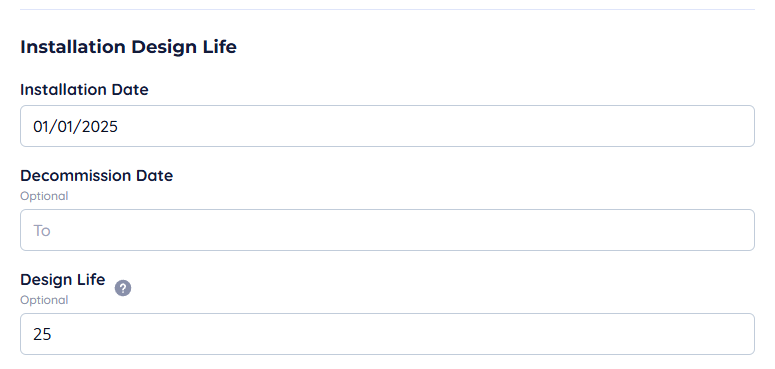
Defines the operational period of the turbine.
- Installation Date: Date installation is complete.
- Decommission date (Optional): Date after which the installation is unavailable.
- Design Life (Optional): Number of years from installation date the installation will be available.
An installation date is required. If neither decommission date nor design life are present, the turbine is considered installed until the end of the simulation.
Wind Turbine Details
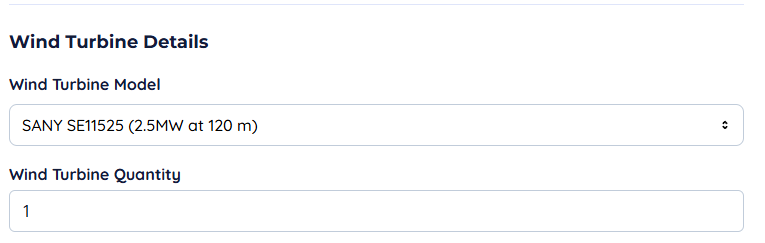
- Wind Turbine Model: Select the turbine from the drop-down menu (searchable).
- Wind Turbine Quantity: The number of turbines.
Location Information
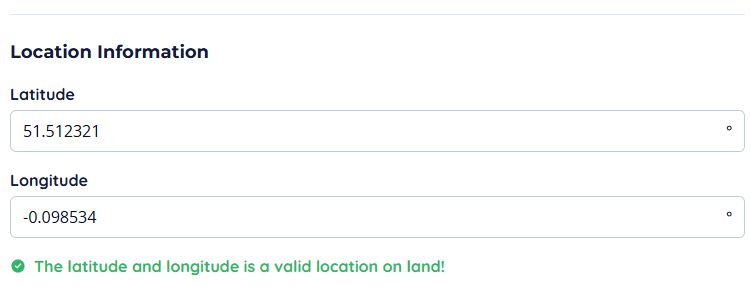
- Latitude/Longitude: Coordinates for the array (accuracy of 5 km²).
Operational Times and Maintenance
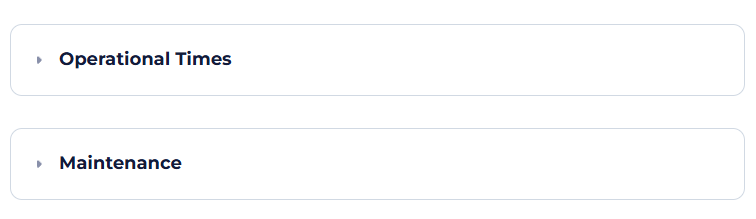
- Operational Times can be used to define the times when an installation is active.
- Maintenance is used to create shutdown periods to maintain assets or automatic costs based on the number of hours an installation has run.
These are explained in more detail in the Operational Times and Maintenance Section after Modules.
Specialisations and Use Cases
Integration with Other Systems
Wind turbines complement energy systems and support renewable energy strategies by:
- Providing clean electricity generation with excellent seasonal and diurnal complementarity to solar resources
- Supporting grid stability through diverse renewable generation profiles that reduce overall system variability
- Enabling energy storage integration for managing wind intermittency and providing dispatchable renewable power
- Facilitating hybrid renewable installations that combine wind and solar resources for improved capacity factors
Residential and Commercial Applications
Wind installations serve diverse applications across residential and commercial sectors, though with different considerations compared to solar installations. Small wind turbines ranging from 1 to 100 kW capacity provide distributed renewable generation for rural properties, agricultural operations, and commercial facilities with adequate wind resources and minimal noise restrictions. Unlike urban solar installations, small wind systems require significant separation from buildings and neighbouring properties due to noise and safety considerations.
Commercial and industrial facilities with appropriate wind resources increasingly deploy medium-scale wind turbines ranging from 100 kW to 3 MW capacity for on-site renewable electricity generation. Manufacturing facilities, particularly those in rural or coastal locations with consistent wind resources, leverage wind systems to reduce electricity costs while achieving sustainability targets. These installations require sophisticated grid interconnection systems and often incorporate energy storage to manage variability.
Educational institutions and government facilities utilise wind installations as both renewable energy sources and educational demonstration projects, particularly in regions with strong wind resources. University campuses and research facilities often incorporate meteorological monitoring systems alongside wind turbines to provide real-time data for educational programs and wind resource assessment.
Agricultural operations represent an important application area where wind turbines provide supplemental income through land lease arrangements while maintaining agricultural productivity. Farmers can continue crop production and livestock grazing around turbine installations, creating dual revenue streams from the same land area.
Utility-Scale and Industrial Applications
Large-scale wind farms ranging from 10 to 500 MW capacity serve wholesale electricity markets, providing significant renewable electricity capacity with some of the lowest levelized costs of electricity among all generation technologies. These installations incorporate sophisticated power collection systems, advanced turbine controls, and comprehensive meteorological monitoring to optimise performance across diverse wind conditions.
Industrial facilities with significant electricity consumption and appropriate wind resources develop dedicated wind installations to process electricity supply. Mining operations, chemical processing facilities, and heavy manufacturing often incorporate wind systems combined with energy storage to reduce electricity costs and improve energy security in locations with limited grid connectivity.
Offshore wind installations represent the highest-growth segment of wind development, utilising stronger and more consistent marine wind resources to achieve capacity factors exceeding 50%. These installations require specialised foundation systems, marine-grade electrical equipment, and sophisticated installation vessels, but provide access to superior wind resources closer to population centres.
Distributed wind applications include community wind projects where multiple stakeholders share ownership of wind installations, providing renewable electricity benefits to local communities while maintaining local economic development benefits.
Specialised Configurations
- Offshore Wind Systems: Marine installations utilising superior coastal wind resources
- Distributed Wind Networks: Community-owned installations providing local renewable energy benefits
- Hybrid Renewable Systems: Combined wind and solar installations optimising resource complementarity
- Agricultural Wind Integration: Dual-use installations maintaining agricultural productivity while generating renewable electricity
Sensitive Parameters
Wind system performance depends critically on several key parameters that must be carefully evaluated during development and monitored throughout the operational life. Wind resource characteristics represent the fundamental driver of system performance, with both mean wind speeds and turbulence intensity significantly affecting electricity generation. Wind speed increases exponentially with height, making hub height selection one of the most critical design parameters for optimising annual energy production.
Turbulence and wind shear conditions significantly impact both energy production and turbine mechanical loads, with complex terrain, vegetation, and nearby structures creating turbulent flow patterns that can reduce performance and increase maintenance requirements. The shade factor parameter provides a simplified method for accounting for local obstructions, but detailed wind resource assessments are essential for accurate performance predictions in complex terrain.
Air density variations due to temperature, humidity, and altitude affect turbine power output, with higher altitudes and warmer temperatures reducing air density and consequently power production. Wind turbines are typically rated at standard conditions, but actual performance varies significantly based on local atmospheric conditions throughout the year.
Turbine availability and maintenance requirements critically affect long-term energy production, with offshore installations facing particular challenges due to weather-dependent access restrictions. Lightning strikes, extreme weather events, and component wear patterns vary significantly by geographic location and local climate conditions, requiring location-specific maintenance planning and availability assumptions.
Economic Sensitivities
- Wind Resource Variability: Annual and seasonal variations in wind speeds directly affect electricity generation and project economics
- Turbine Selection and Sizing: Hub height, rotor diameter, and rated capacity optimisation for specific wind resources
- Grid Interconnection Costs: Transmission infrastructure requirements for wind installations, particularly in remote locations
- Maintenance and Operations Complexity: Access difficulties and specialised service requirements affect ongoing operational costs
Technical Risk Factors
- Turbulence and Wake Effects: Complex wind flow patterns can reduce performance and increase mechanical loads
- Extreme Weather Events: High wind speeds, lightning, and ice loading pose risks to turbine integrity and availability
- Grid Integration Challenges: Wind variability and ramp rates may require sophisticated grid interconnection systems
- Noise and Visual Impact Constraints: Community acceptance issues that may limit development opportunities
Regulatory and Environmental Considerations
- Aviation and Radar Interference: Flight path restrictions and radar system compatibility requirements
- Wildlife Impact Assessment: Bird and bat mortality studies and mitigation requirements
- Noise Regulations: Sound emission limits that may restrict turbine placement near residential areas
- Environmental Permitting: Land use regulations and environmental impact assessments for wind developments
- Grid Connection Standards: Utility interconnection requirements for wind systems, including power quality and grid stability considerations
- Setback Requirements: Minimum distances from property lines, roads, and structures affecting site layout and development costs